DAVID LEVY
Age: 33
Country: Canada
David began as a concept artist for video game companies. He
is now a senior concept artist and has recently set up Steambot Studios with
his friend and fellow IFX contributor BARonTiERi.
Web:http.//vyle-art.com
David Levy has happy memories of growing up in the south of France:
“It’s very sunny all
year long, warm, with a very nice coast,” he smiles. “I spent most of my
weekends
on the beach, or sailing with my dad.” The strange thing is that when you know
this about David and you look at his artwork, it makes perfect sense. You can
feel the sunlight and fresh air. There’s a strong feeling of ‘goodness’ coming
through.
“My grandfather used to draw a lot, and I saw him as a
hero,” David recalls. “He built roads in the desert, ski-jumped and was a flower
geneticist, while staying very humble. He was a real inspiration for me, and
drawing was part of it.” The first creature David drew was the monster from the
movie Legends.
Now leading work on a new sci-fi MMO for SpaceTime Studios
in Austin, Texas, David feels he’s finally in a
position to do what he’s always dreamed of –“creating a whole universe and all
the creatures living within it”. It sounds like a grand scheme, but he
continues to retain his humility. “It’s the most challenging project I’ve ever
worked on,” he says, “but it’s also the most rewarding.”
Inspire me
Japanese animation was an important early influence, and one
you can still see echoes of in David’s work. But by the age of 11, a nautical
theme had also begun to make itself felt. “At that time I wanted to become a
naval architect,” he explains. “So I started drawing and creating blueprints of
hundreds of sailing boats.”
That sounds like hard work for a pre-teen, but David was
smitten. “Then later it became more about windsurfing and cars; I drew hundreds
of those, too. I think what was always more attractive to me was to create
something that didn’t exist yet, something different and original.” Between
blueprints of original creations and weekends at the beach, a pattern was
beginning to emerge. “I found a real pleasure in inventing,” he recalls.
These weren’t half-baked plans either: “I always had a ton
of very ‘serious projects’, such as a revolutionary sailboat,” says David. “And
I’d create everything, from the company’s logo to the whole set of sails.” Most
youngsters would have given up soon after they’d had the idea, but not this
one.
“Anything that was related to flying or space was on my list
as well,” David adds. His bedroom walls were covered with fluorescent stars,
and his bookshelves were filled with titles involving space exploration: “That
became a great subject to inspire my drawing.”
Living off passion
Although David had an excellent role model, the idea of
making a living through art didn’t seem a genuine possibility. “Until very late
I didn’t realise it could be anything more than having fun creating impossible
stuff,” he remembers. Inspired by comic books and movies, David just did what
came naturally, putting pen to paper and making those ideas seem more real.
Then one day came a breakthrough. “I discovered that behind
beautiful objects, hard-working artists were living off their passion,” he
explains. But still, “At the time I was a lazy kid, only interested in playing
video games or spending my days on the beach, windsurfing…” Young David needed
more convincing, and this time Mum came to the rescue, virtually forcing her
son to enter an art school test.
Structured thoughts
That audition did the trick. “It opened my eyes and I
realised that I wasn’t the only one with a passion,” he recalls. “From then on,
I decided to put all my energy into art.” However, following his inventive
tendencies, the direction he chose was a practical one – industrial design.
Studying it was, says David, “a real eye opener”. Before then he hadn’t really
grasped that work needn’t be a burden, “Going every day to work and being
passionate sounded like heaven to me – and you could even earn money!” he
enthuses. As a discipline, design opened up a world of possibilities for David.
“Also, it gave me what probably was and still is the most important thing to me
– a structured thought process.”
The thing about industrial design is that you can’t just
jump into creating something without a structure; you have to have a plan.
“What’s called the ‘creative process’ is the same for anything you create,”
David explains. “Always start with a sketch,” he advises. “It’s almost like a
magic trick. Whatever you do, however complex it is, it always works!”
Naturally, sketches vary in complexity. “The sketches you’ll
need to create a toothbrush are probably less complex than the ones you’ll need
to build an aircraft carrier,” he notes, “but the process stays the same.”
David is scathing of the idea that there’s a magical shortcut to talent. “There
are no fast tricks to make your art better,” he insists. “The solution is
elsewhere: it’s all about time and process.” Accepting those conditions is the
key to progress.
Game on
David wasn’t destined to be a product designer. One day,
while studying architecture in Holland,
he happened to catch a TV show about a Parisian game studio. “Oddly enough, I
was talking to one of my best friends on the phone a few days later,” he
remembers. “It turned out he was working for the same company!” Regular readers
will probably recognise the name: “It was BARonTiERi.”
Right away, it was clear to David that games were going to
become increasingly important. “I realised then, there was a good chance that
this medium would become the main entertainment of the future.” Going into
games offered a way to tell stories and create worlds. “The fact that I’d been
a console addict for many years influenced my choice too,” he adds.
Already passionate about movies, David believed that a
similar process of creation could be applied to games, creating a natural place
for the concept artist. “Looking at it now,” he says, “I was right, but I think
it took 11 years for the industry to understand it.” Those early jobs weren’t
ideal, but you get out what you put in. “Working in a bad spot will teach you
the most important thing: we are extremely lucky working as concept artists.”
Beautiful curves
The films and books that David loved had a clear theme
running through them: “Obviously Star Wars was a big influence, but it went
further than that. As a kid I really wanted to become an astronaut, or a test
pilot (I still do!), so any book I could read on the subject I jumped on.”
Thanks to the writings of Isaac Asimov, Theodore Sturgeon
and Ray Bradbury, and movies such as 2001 and Blade Runner, “I was hooked,” he
says. And when David wasn’t getting goggle-eyed at the vastness of space, his
older sister was subjecting him to another type of classic. “She always took
great pleasure in forcing me to watch horror movies like Alien, which totally
traumatised me, and gave me nightmares for months,” David grins.
As he explored his need to invent, these earlier influences
have been supplemented with a more general love of creative space and
structure. “Like other artists such as Sparth,” he says, “I’m extremely inspired
by modern architects, Frank O Gehry being one of them, but also Lebbeus Wood
and Calatrava. They’ve mastered the modelling of environments and spaces
through beautiful curves.” Studying these masters of human space gives David
tools with which to generate believable alternatives. “Using curves helps a lot
in the reading of an image,” he explains. “It helps the eye flow, and a less
aggressive image tends to please people more.”
Leaving it loose
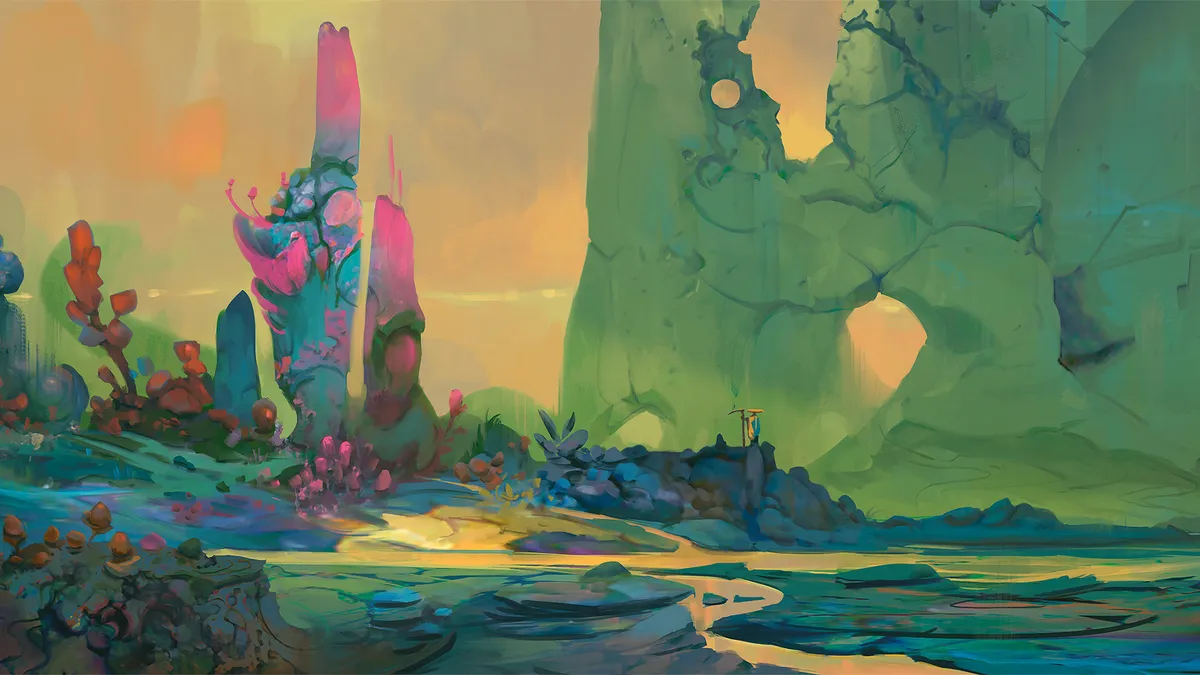
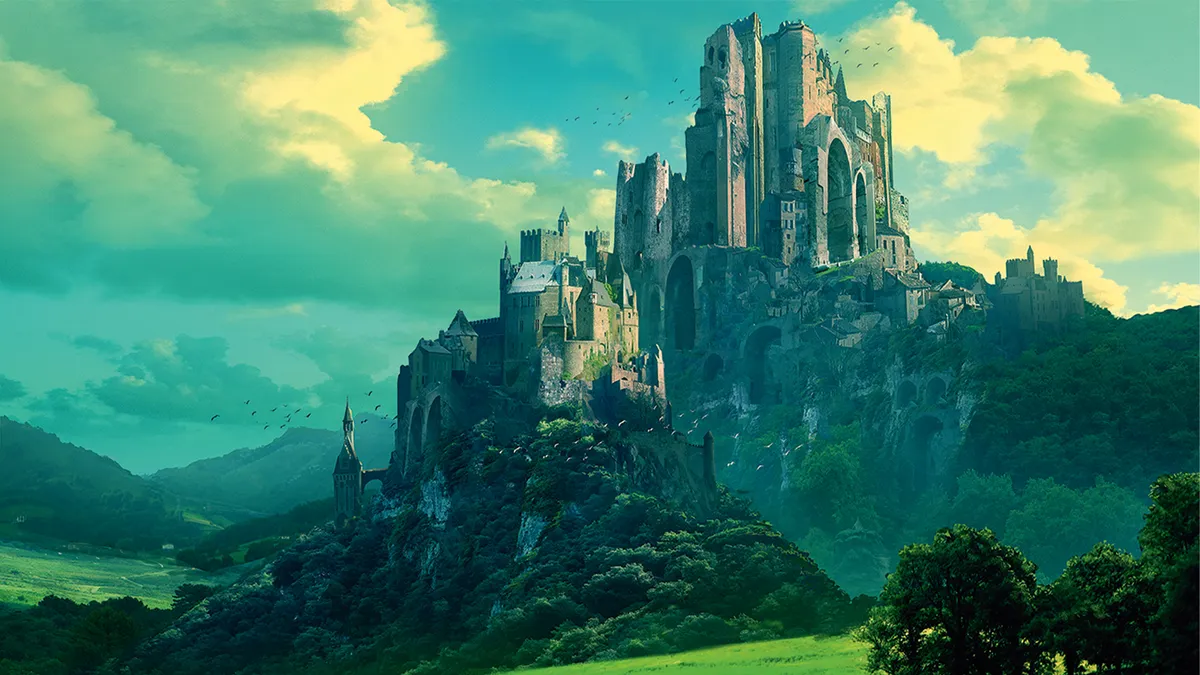
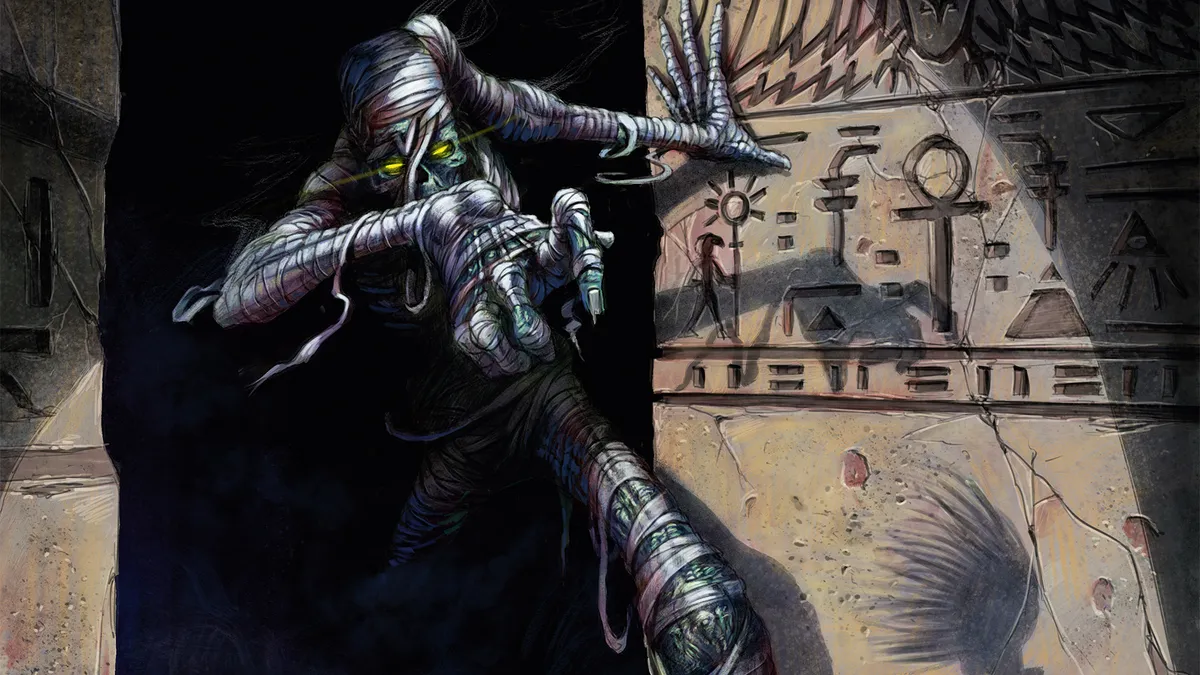
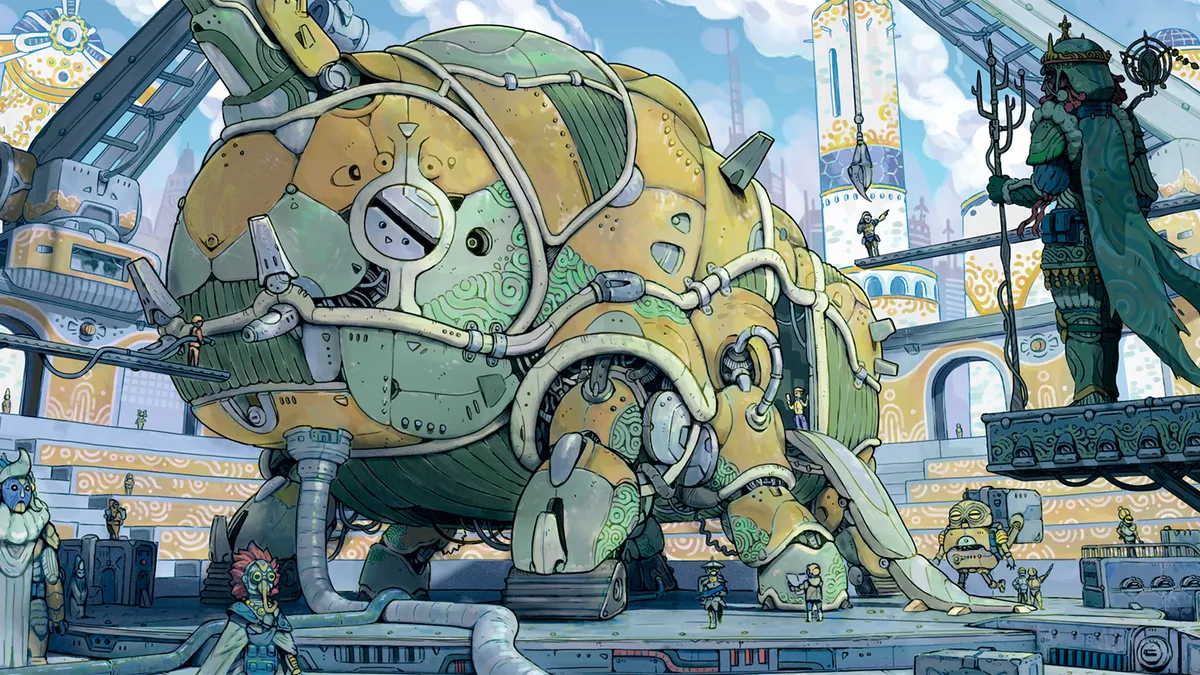
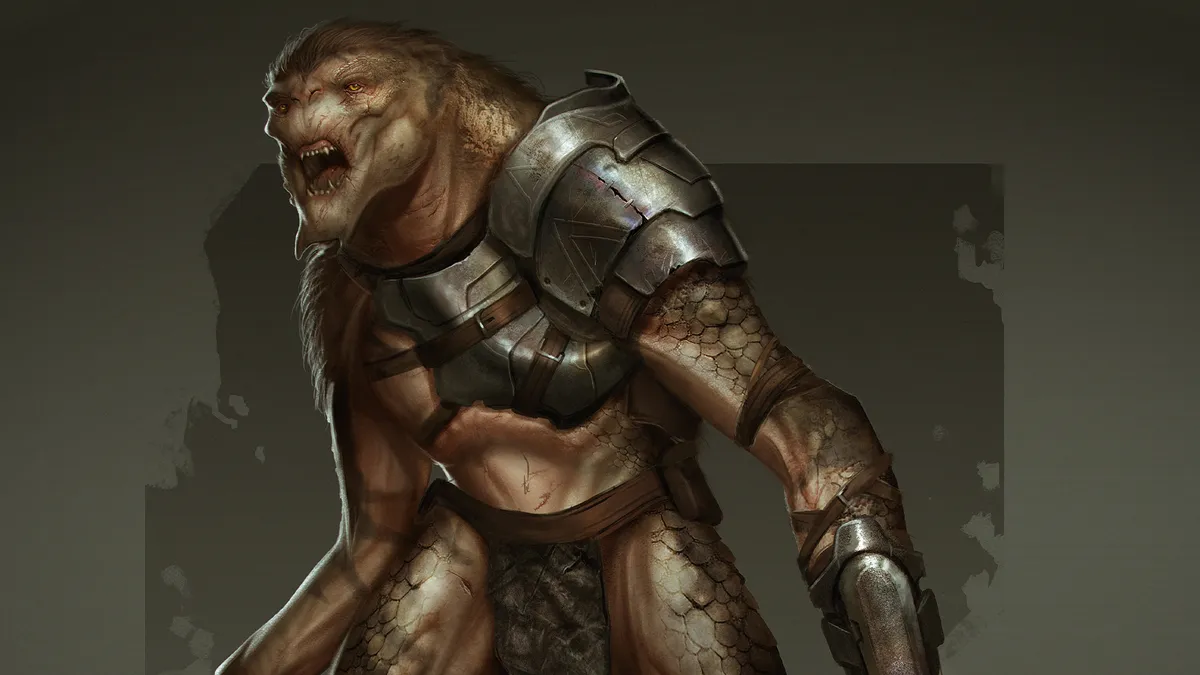
David continues to apply these architectural lessons to elegantly
far-fetched visions of deranged creatures, gravity-defying spacecraft and
mythical places. “I think a lot of it has to do with not stopping curves or
lines,” he says of his style. “I try not to be too ‘tight’ with my paintings,
and even though I stay loose, the high resolution helps achieve a ‘detailed’
look.”
It’s interesting to note that David keeps his approach
free-flowing but doesn’t insist on an analogue approach. “There was a time I
would scan drawings, but then I’d spend more time cleaning the pencil stuff
than actually polishing the painting,” he explains. On top of this, when time
is production-critical, staying entirely digital speeds up the process
tremendously. “When you see Dan Milligan drawing on a computer, you have no
doubts about staying digital all the way.”
In the end, he feels, it’s down to personal choice: all you
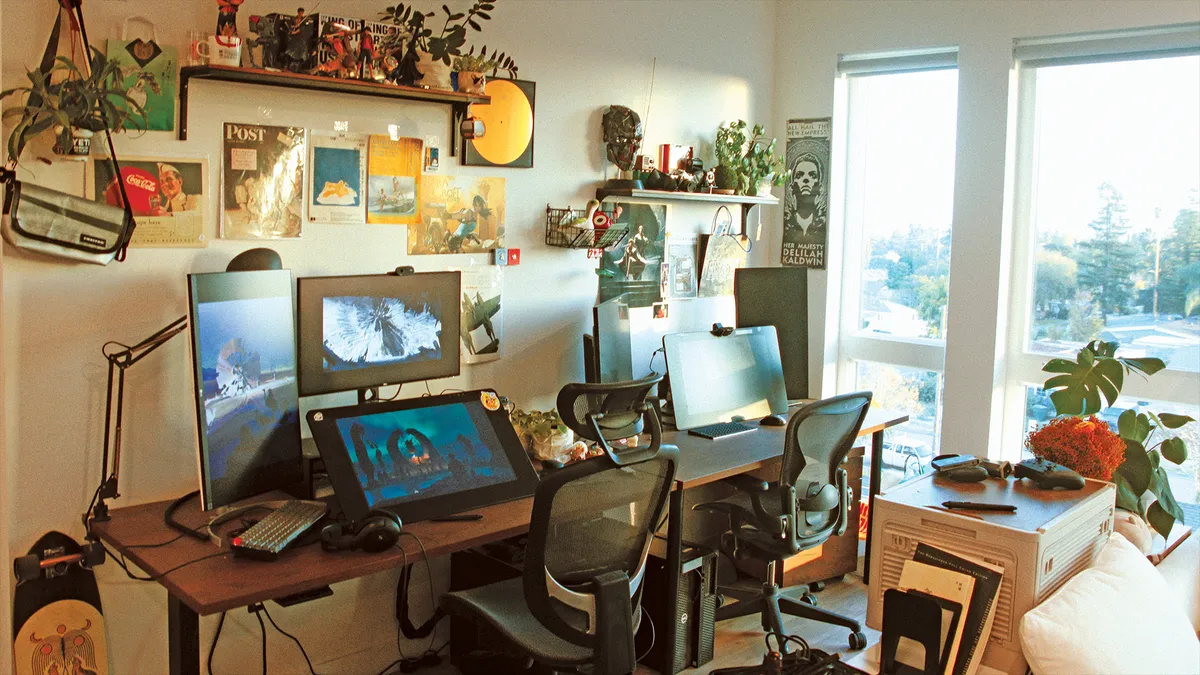
have to do is be comfortable. “For example, I don’t like painting on smaller
Wacoms,” he says, “because I think the movement should come from your arm and
not your wrist.”
Understanding your own needs is half the key. The rest is
practice. “When I go back to painting after a period with less work, I find it
extremely painful to get back in the same rhythm,” David reveals. “It feels
like starting a train: difficult at first and then momentum helps.”
Once it’s moving, though, you just want to climb on board…